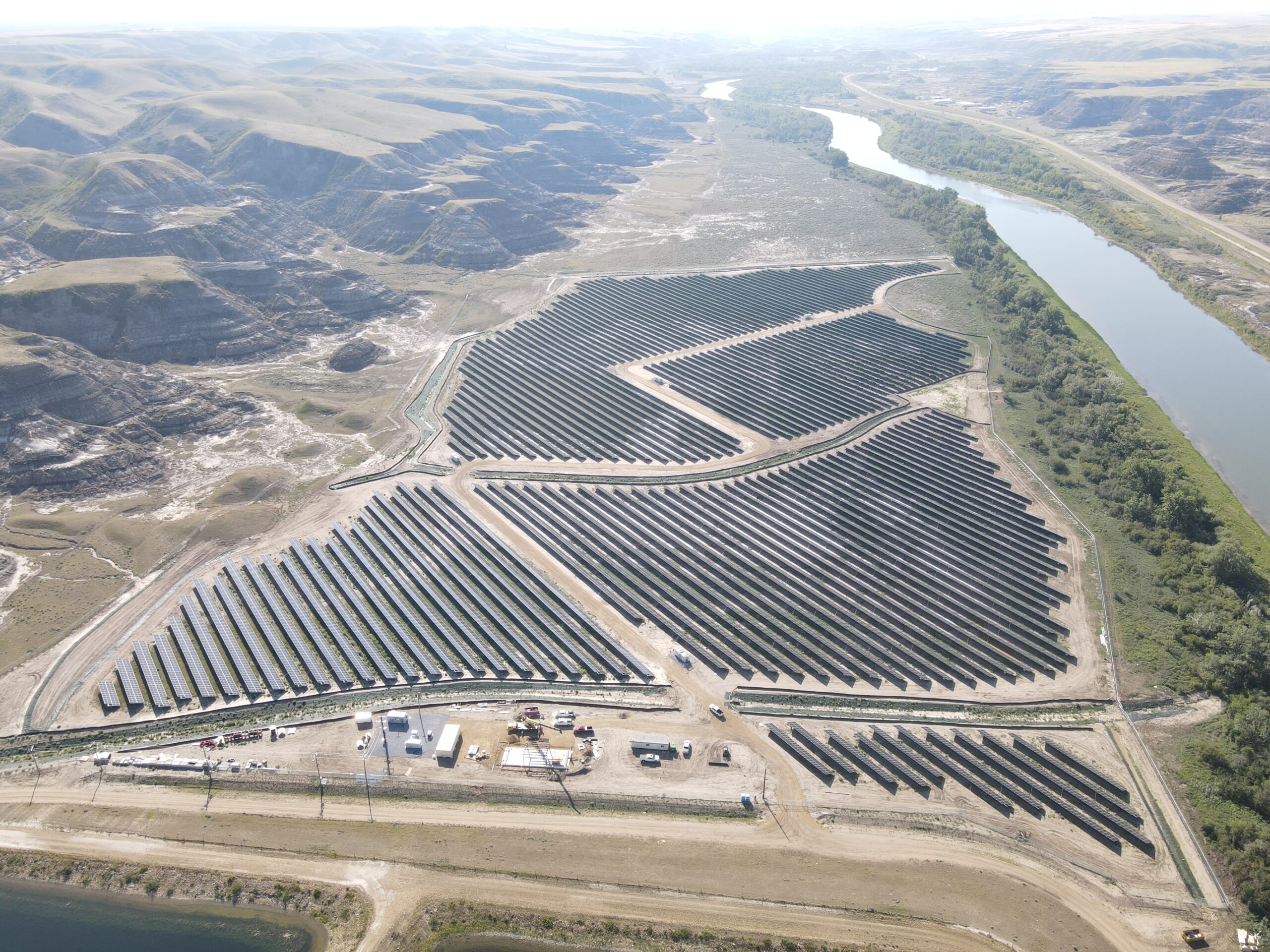
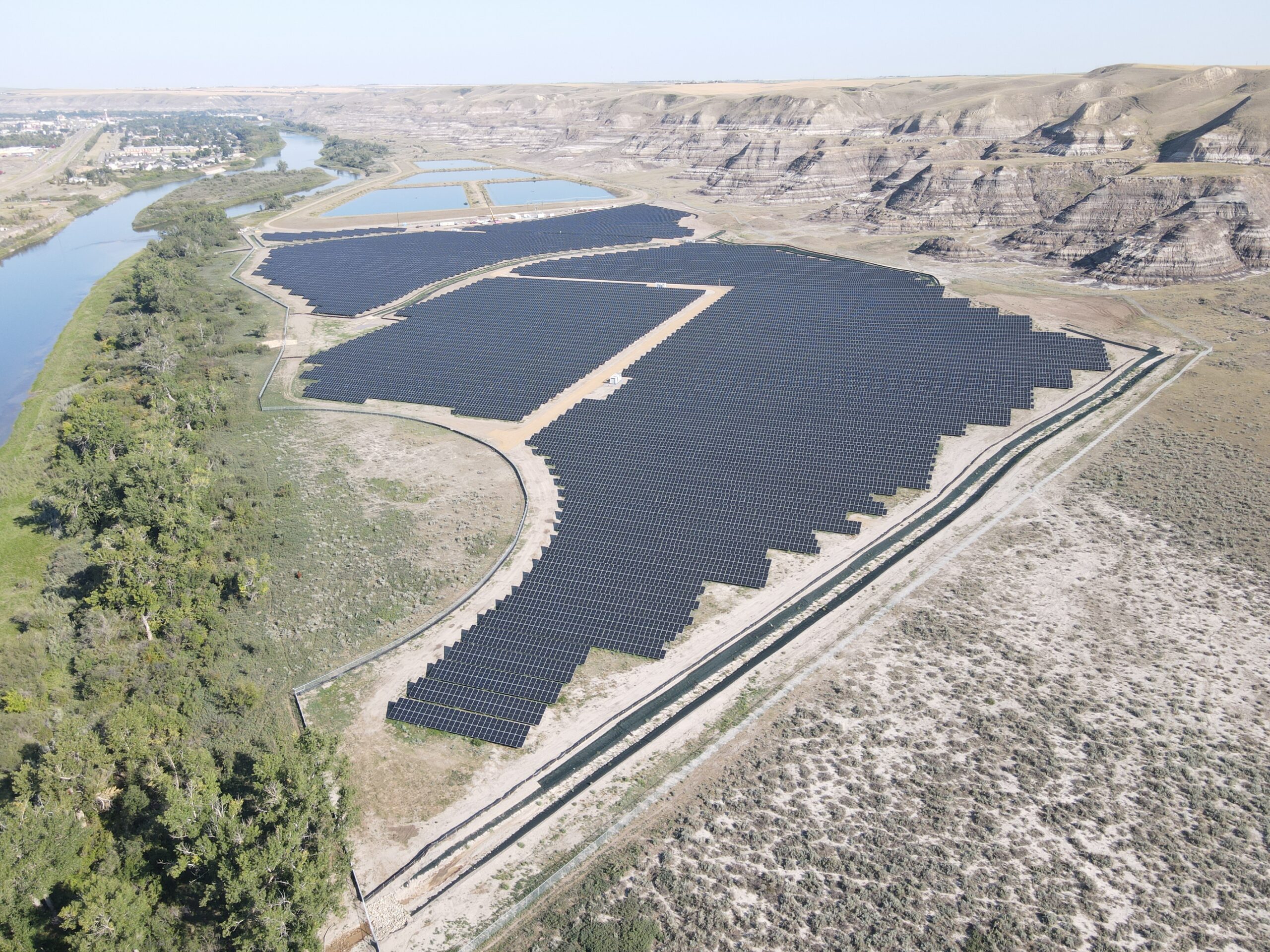
On the prairie outside Drumheller, Alberta, rows of solar panels do more than soak up sunshine. They feed a battery that has quietly become one of Alberta’s most instructive experiments in the province’s energy transition, proving that pairing solar power with storage can work and be profitable in one of North America’s most competitive electricity markets.
When Concord Green Energy began developing the Drumheller Solar and Battery Storage Project, utility-scale battery storage was still largely unproven in Alberta. The open question wasn’t whether the technology worked. Solar panels and lithium-ion batteries are mature, commercially available products. The question was whether the two could be integrated and operated effectively in Alberta’s deregulated electricity market to reliably deliver power exactly when it was needed most.
Concord bet that the answer was yes. The company saw energy storage as a technology that would become increasingly important as Alberta’s grid evolved and viewed the region’s abundant sunshine as an opportunity that hadn’t yet been fully captured.
After its first full year of operation, some of the most valuable results are not simply the electricity generated or emissions avoided, but the operating knowledge gained.
“Drumheller was never about the size of a single project,” said Terry Hui, President and CEO of Concord Pacific Group. “Its value was in proving, under real Alberta conditions, how solar and battery storage can work together. Alberta has rightly focused on reliability and intermittency. After a year of operation, we now have practical experience showing how storage can help address that challenge, and those lessons can be applied at much greater scale.”
A first-of-kind hybrid system
The completed project pairs a 13.5-megawatt solar facility with a 3.6 MW / 7.2 MWh lithium-ion battery, connected in a direct-current-coupled configuration, making it one of the first hybrid systems of its kind built in Alberta. The $36.7-million project received a $5-million investment from Emissions Reduction Alberta (ERA) through its BEST Challenge, which helped enable a first-of-kind commercial demonstration of DC-coupled solar-plus-storage in the province.
The concept was straightforward, even if the engineering wasn’t: the battery stores electricity generated during sunny, low-demand periods and discharges it back to the grid when demand and prices rise. That flexibility helps balance supply and demand on the grid and extract more value from every unit of renewable power produced.
For Concord, however, the objective went beyond demonstrating that the equipment worked. Drumheller provided an opportunity to learn how a hybrid renewable asset should be operated in Alberta’s deregulated and highly dynamic electricity market.
That lesson emerged directly from experience. Getting the technology to work was only part of the challenge. Learning how to operate it profitably in Alberta’s volatile, price-driven electricity market proved just as important.
Concord initially configured the battery to charge primarily from surplus solar power that might otherwise go unused. But cloudy periods, shifting weather, and changing market conditions made solar supply inherently variable. The operating strategy therefore evolved. Rather than optimizing the battery for a single scenario, the team increasingly focused on anticipating market conditions and maintaining sufficient stored energy to respond when the grid placed the greatest value on it. The results underscored the importance of that flexibility. Three high-price days in May 2025 alone generated nearly 65 per cent of that month’s battery revenue.
Coordination proved as critical as strategy. Running a hybrid asset well required close, ongoing communication among operations staff, dispatch providers, and system operators, especially as weather, demand, and market prices shifted in real time. Construction brought its own lessons: winter access issues and contractor capacity constraints delayed the build, prompting Concord to take a more hands-on role in overseeing the project. Together, these experiences reinforced a broader theme: solar-plus-battery projects are achievable in Alberta, but they demand flexibility, close coordination, and active management at every stage.
Building toward a more resilient grid
Beyond the operational lessons, Drumheller has already delivered measurable environmental benefits. The project cut an estimated 5,291 tonnes of emissions in its first reporting period alone, with cumulative reductions projected to exceed 105,000 tonnes by 2050. The experience at Drumheller is particularly relevant to Alberta’s broader discussion about electricity reliability.
Concord Pacific has come a long way in addressing challenges with intermittent renewable power production, ensuring dispatchable electricity is available when wind and solar are not producing. In Drumheller, pairing solar with storage means electricity does not necessarily have to be consumed at the moment it is generated. When solar production is available, some electricity can be stored. The battery can then dispatch that electricity later as solar production declines, demand rises, or the grid places greater value on additional supply.
Those lessons aren’t staying on the shelf. Concord is now evaluating opportunities to add battery storage to several of its existing Alberta solar facilities and is building hybrid-ready designs into new projects from the outset. The company expects its next generation of solar-plus-storage assets to be larger in scale and better positioned to participate in emerging market opportunities as Alberta’s regulatory landscape evolves.
In many ways, Drumheller’s greatest contribution may not be the megawatts it generates or the emissions it avoids, but the playbook it leaves behind: a real-world demonstration that solar and storage, working together, can hold their own in one of the country’s toughest electricity markets.