
Somewhere in the world right now, a well pad is leaking methane no one has spotted yet. Multiply that by hundreds of thousands of wells, vast networks of pipelines, and a patchwork of regulations in constant flux, and you start to see the problem Jessica Shumlich and Thomas Fox set out to solve.
Methane is invisible, odourless and far more potent than carbon dioxide. It is also becoming a critical factor in how energy is bought and sold. Buyers, regulators and investors increasingly expect producers to provide empirical proof of their emissions performance. Yet many oil and gas operators manage vast amounts of emissions data without the time, tools, or expertise needed to turn it into reliable inventories and useful insights.
That’s the gap Shumlich and Fox — an engineer and an academic with deep roots in the oil and gas industry— decided to close when they co-founded Highwood Emissions Management in 2020.
“The world needs clean, safe, reliable, and abundant energy,” says Fox, Highwood’s CEO. “Consumption of low-methane oil and gas is growing, and buyers around the world increasingly require empirical proof of emissions performance.”
The Problem Hiding in Plain Sight
For oil and gas operators, managing methane emissions is no longer just a regulatory requirement. Buyers increasingly want lower-emissions products, and companies need to meet new expectations to stay competitive, maintain market access and potentially earn a premium for their output.
But keeping up can be complicated. Operators must navigate evolving regulations, unfamiliar technical requirements, new costs, and a range of legal, financial, and reputational risks, all while deciding where their time and money will make the biggest difference.
Highwood’s answer was to build a platform that consolidates bottom-up inventories, site information, measurement results, activity data, emission factors and other reporting inputs into a single system. EIP turns this complex information into measurement-informed methane estimates in minutes, helping operators spend more time investigating emissions, taking action and making better strategic decisions.
Building the Emissions Intelligence Platform
The result is the Emissions Intelligence Platform (EIP). Highwood developed it alongside its industry steering committee, the Methane Analytics Collaborative (MAC), which brings together major operators who face these challenges every day. Their input helped shape the platform. EIP produces methane inventories aligned with internationally recognized standards, using structured workflows to generate estimates that are automated, verifiable, and consistent. This gives operators the information they need to meet regulatory requirements, reduce manual effort, and improve traceability, consistency, and time to value.
“The platform helps understand emissions in context and make better decisions,” Fox says. “It helps operators generate credible emissions information that supports customer expectations, regulatory compliance, and long-term operational planning.”
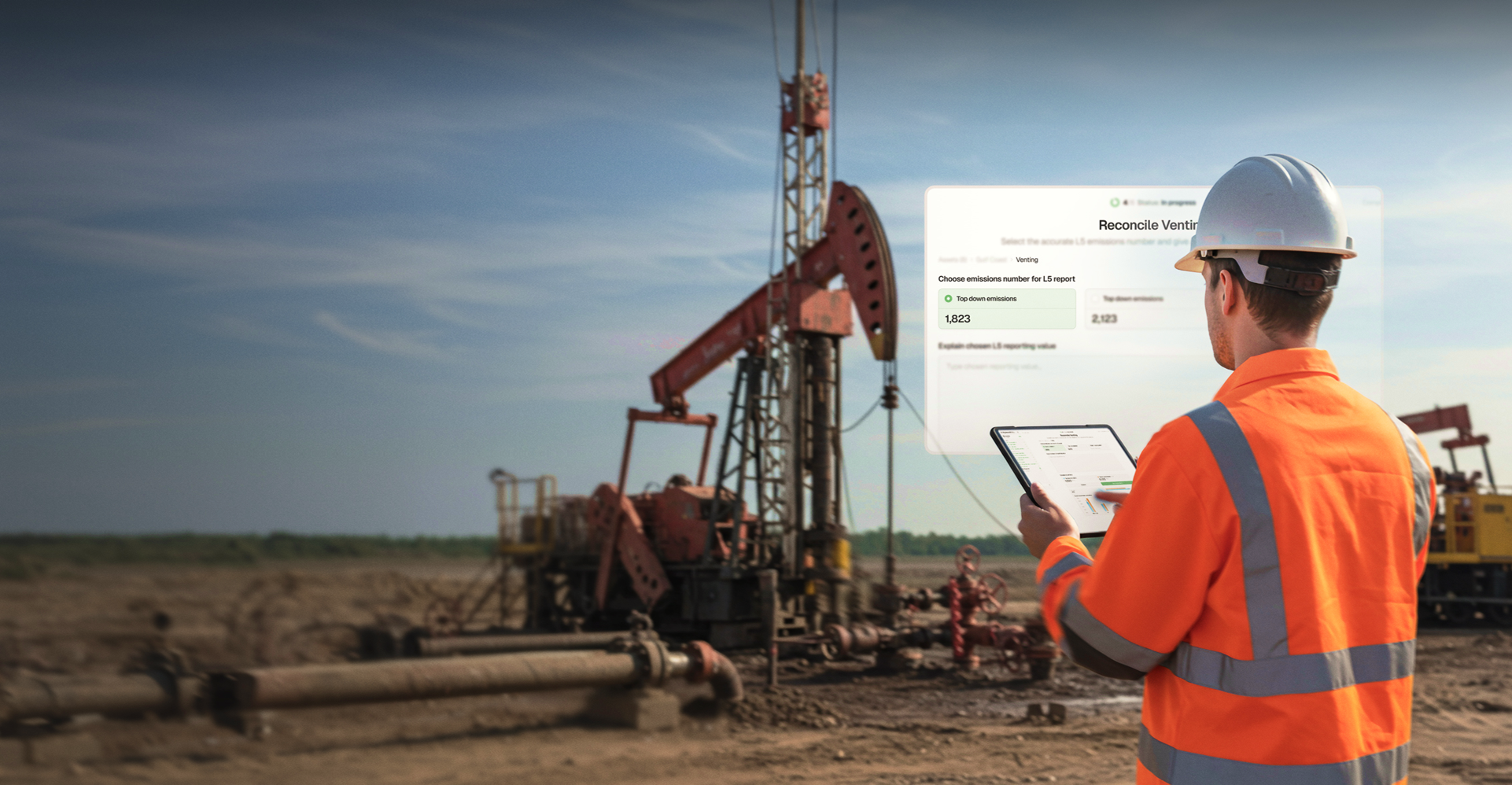
The scale problem is real: operators can be responsible for thousands of wells, pipelines, and facilities, each a data source. That’s where artificial intelligence and digital workflows earn their keep. Reporting that once took months now takes hours for some users, resulting in a 90% reduction in cost and effort.
“Automation and digital innovation have reduced the cost and effort required to build a measurement-informed view of emissions,” Fox explains. “Ultimately, the platform delivers insight directly to operators and absorbs the data processing and preparation burden.”
A Bet That Paid Off
None of this happens without someone willing to fund the unproven stage. Emissions Reduction Alberta invested $2.2 million through its Natural Gas Challenge to help Highwood build and field-test EIP using real operator data, providing the early validation needed to move the platform toward commercial use.
“ERA’s support and partnership have been foundational to EIP’s development,” Fox says. “The program de-risked early-stage technical work, funded validation of platform features with operators and clients, and provided access to resources and outcomes that would have been difficult to assemble alone.”
From Alberta to Six Continents
What began as an Alberta-grown idea is now operating on a global scale. EIP is deployed at over 100,000 facilities across six continents, helping operators navigate a methane landscape that grows increasingly complex as expectations rise.
And Highwood isn’t finished. The company continues to build new analytical and AI-enabled tools to simplify methane workflows, so the next generation of operators can spend less time wrestling with data and more time actually cutting emissions.