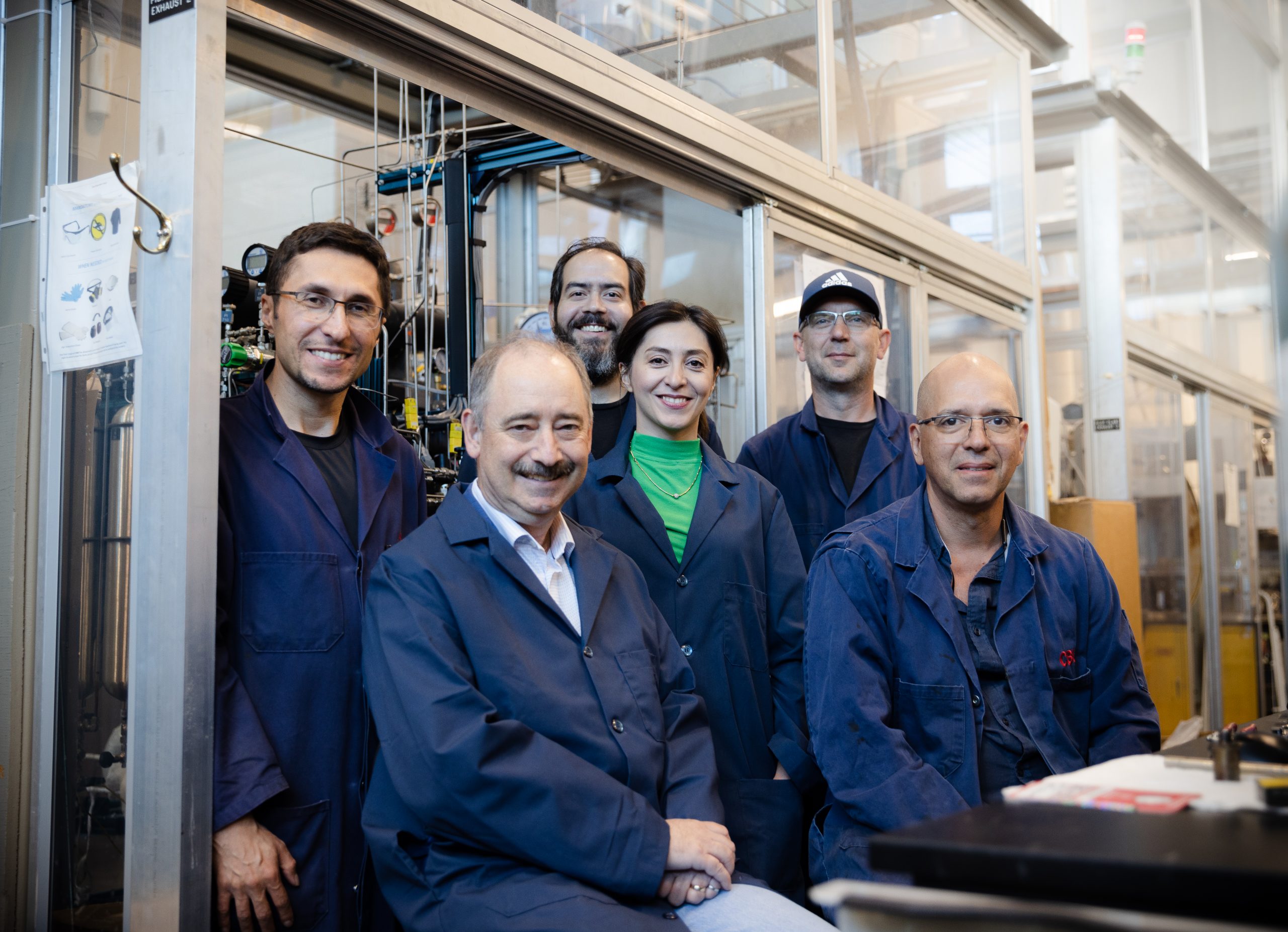
In 2015, at the University of Calgary, PhD student Mina Zarabian and her supervisor, Professor Pedro Pereira Almao, began exploring how to convert carbon dioxide and methane into valuable carbon nanofibres for use in products such as cement and concrete.
The science showed promise, but whether it could support a business was another question.
“The science was exciting, but at first I was not sure it could become a business or whether I was ready to make it my professional career,” says Zarabian, Carbonova’s co-founder and CEO.
An entrepreneurship course at the Haskayne School of Business helped her look beyond the laboratory and test the idea with others. When the technology began to make economic and scientific sense, Zarabian realized they had the foundation for a company.
In 2018, she and Pereira Almao founded Carbonova.
From promising to practical
The next challenge was proving it.
Through its ERA-supported Carbon Reforming to Economic Additives for Transitioning into an Emission-less Era (CREATE) project, Carbonova worked with global construction-materials companies Holcim and Sika to scale production, test its carbon nanofibres in cement and concrete, and learn directly from potential customers.
The testing revealed challenges that had not emerged in the laboratory. Carbonova needed to find a practical way to consistently disperse the nanofibres in the field. The material also had to perform reliably, be affordable to manufacture, and integrate with customers’ existing operations.
“We also learned that a good material is only part of the solution. It has to be manufacturable at the right cost and practical for customers to use,” Zarabian says. “Working directly with industry partners taught us to look at the full system, not just the science.”


Ready for the next step
ERA’s support enabled Carbonova to scale its pilot carbonization reactor and produce enough material for customers to test under realistic conditions. During CREATE, the company doubled the reactor’s diameter, increased production fourfold, and advanced the technology from Technology Readiness Level 5 to 6.
The results went beyond increased production. Carbonova demonstrated that its nanofibres could improve concrete performance and potentially reduce the amount of Portland cement required, lowering emissions and material use.
For Zarabian, however, the biggest breakthrough was reaching the point at which customers could use the material and provide meaningful feedback.
“We were no longer working only from technical assumptions. We were learning directly from the market,” she says. “It gave us much more confidence about where the technology creates the most value and what we need to do to commercialize it.”
Scaling toward commercialization
CREATE helped Carbonova attract private investment and prepare for its next step. The company is now building CDU-25, a commercial demonstration unit capable of producing 25 tonnes of carbon nanofibres each year at the Alberta Carbon Conversion Technology Centre in Calgary.
Supported by $4.4 million from ERA, the $12.5-million project will generate the material and operating data Carbonova needs to attract more customers and scale further. The longer-term goal is full-scale commercial manufacturing for high-performance applications.
What began in a University of Calgary laboratory is moving closer to commercial reality and has the potential for global impact. It has taken years of testing, problem-solving, customer feedback, and collaboration to get there.