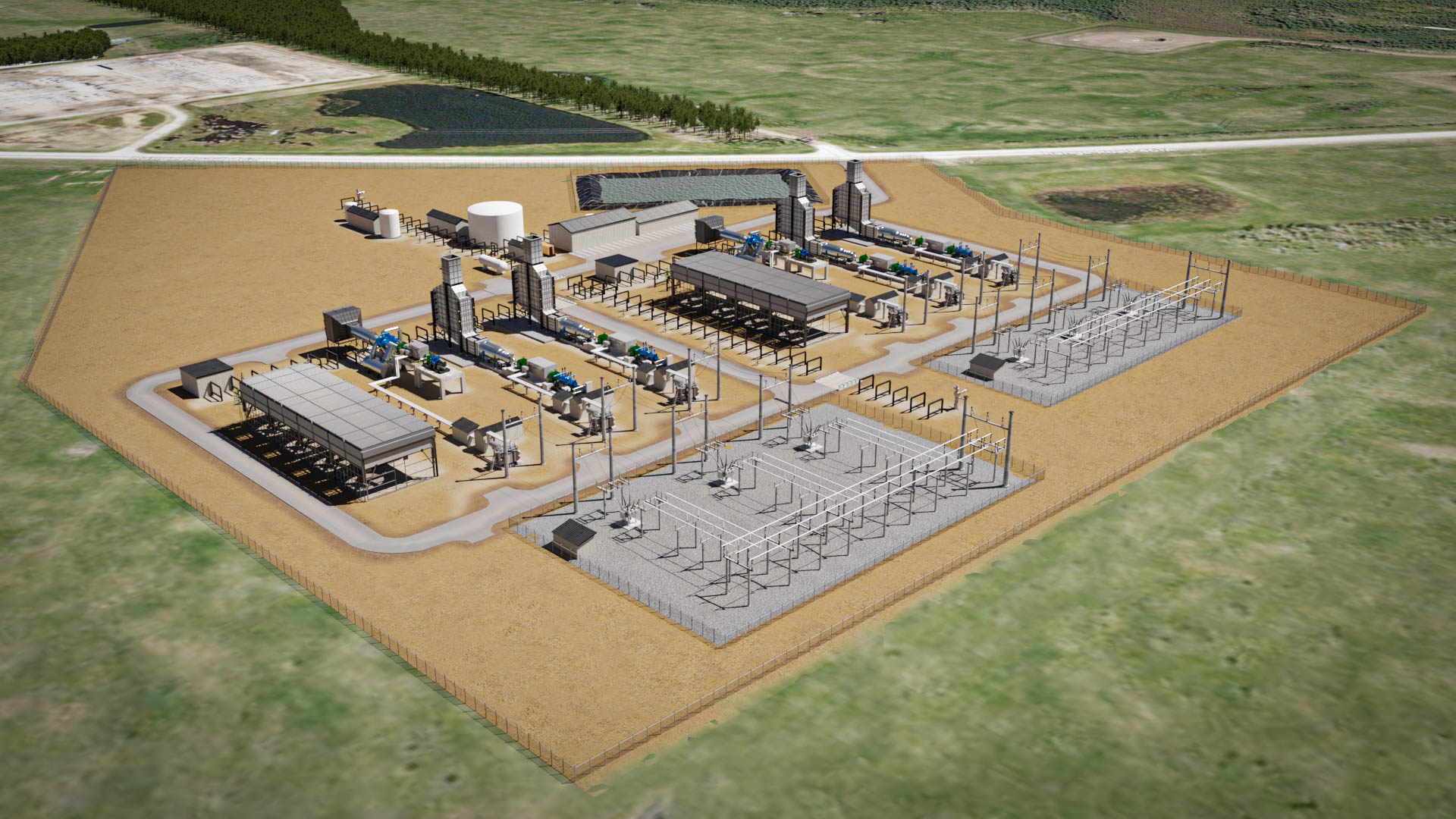
Alberta has generations of experience drilling deep underground and building complex energy projects. Near La Corey, about 25 kilometres northwest of Cold Lake, Cache Power Corp. is applying that expertise to a new challenge: storing electricity.
Cache Power is developing the Marguerite Lake Compressed Air Energy Storage Project. The planned facility will store compressed air in underground salt caverns and generate electricity when needed. The project has secured major regulatory approvals, completed front-end engineering with Siemens Energy, and begun early site work. It is now moving toward construction.
“The Marguerite Lake site brings together a great combination of resources: ideal salt formations for developing storage caverns and access to Alberta’s high-voltage transmission system,” said Jordan Costley, President of Cache Power Corp.
Ready when the grid needs it

To keep Alberta’s electricity grid reliable, supply must match demand. Wind and solar can add power, but their output varies with the weather and may not be available when demand is highest. Saving energy for later helps fill that gap.
One option is compressed-air energy storage (CAES), which uses electricity during periods of low demand to compress air and store it under pressure in solution-mined salt caverns. When demand rises, the air is returned to the surface, heated, and sent through turbines to generate power. Marguerite Lake is designed to provide 48 hours or more of storage and to respond quickly when the grid needs additional generation.
Leveraging Alberta’s expertise
Working with underground salt caverns is not new to Alberta. Operators have used them for decades for brine production and natural gas storage. That history provides Cache Power with a strong foundation for using salt caverns to store electricity at scale.
The site offered another advantage. Alberta’s high-voltage transmission system is less than 800 metres away, reducing the amount of new infrastructure needed to connect the facility to the provincial grid.
ERA invested $5 million in the $15.8-million detailed engineering stage of the project, helping Cache Power advance the early development work needed to move Marguerite Lake toward construction readiness.
“Compressed air energy storage has never been deployed in Alberta before, and projects of this scale require detailed engineering before major investment decisions can be made,” said Costley. “ERA’s support helped us reduce technical and development risk and build the information needed to move toward commercialization.”
A project built on partnerships
That progress has relied on a wide range of partners.
The project is located on the traditional territory of Cold Lake First Nations, which has been involved for several years and has the option to become an equity partner. EllisDon joined as an equity and development partner, while Siemens Energy, Hitachi Energy, Babcock & Wilcox, and RESPEC brought specialized technical expertise to the project.
“Partnerships have been the key to advancing Marguerite Lake,” said Costley. “Developing a project of this scale requires expertise across many different areas, and these relationships have helped us move the project to this stage of advanced execution.”
Commercial operation would make Marguerite Lake Alberta’s first compressed air energy storage facility and could provide a model for future projects. For Costley, that would be a major step for both the company and the province.
“Commercial success at Marguerite Lake would demonstrate that Alberta can develop large-scale, long-duration energy storage using its existing subsurface expertise and power generation knowledge,” Costley concludes.