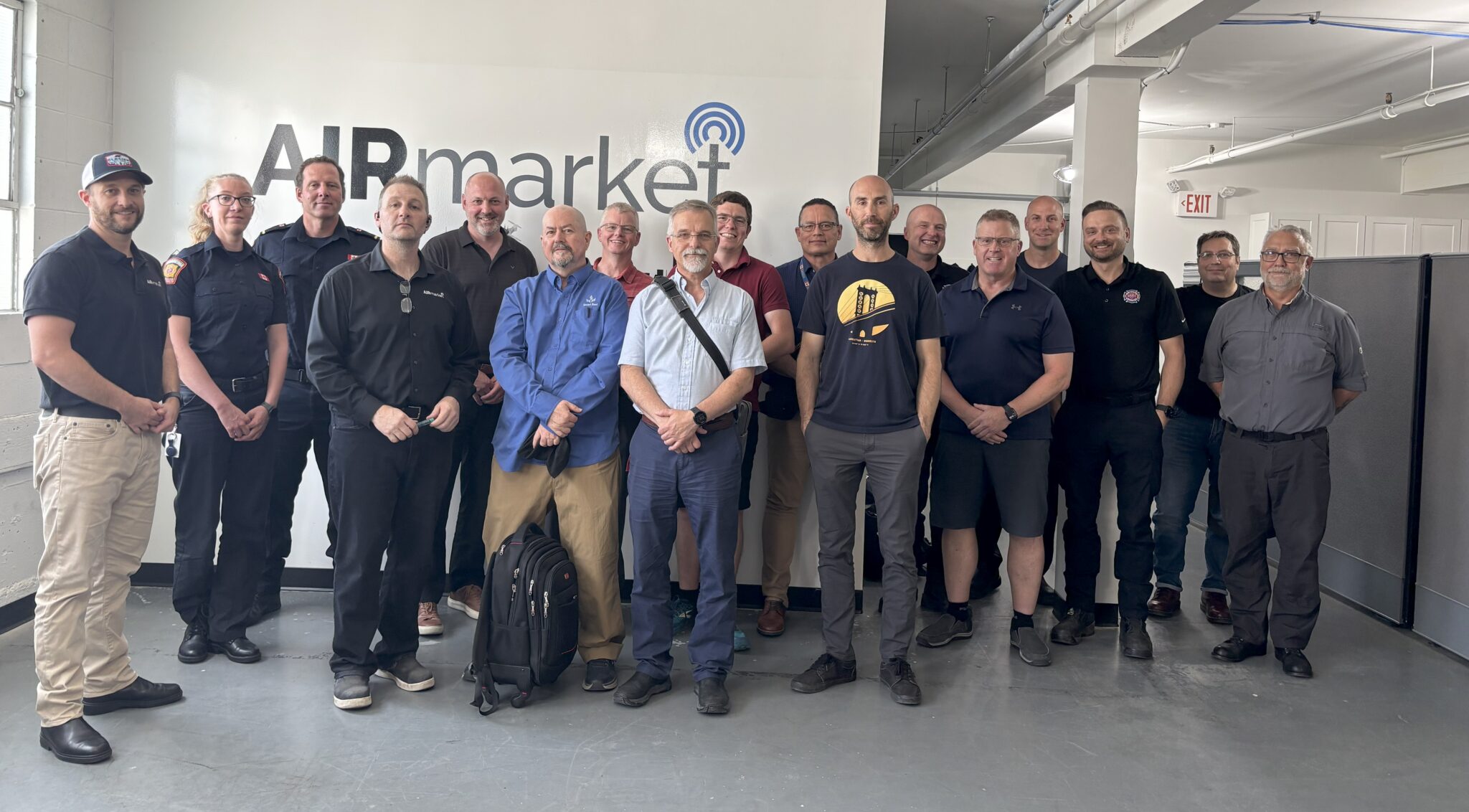
Before a fire truck reaches an emergency scene, a drone may already be overhead, giving responders a live view and helping them make better-informed decisions.
In Strathcona County, AIRmarket’s drones arrive before the fire truck 71 per cent of the time, thanks to its Drone as First Responder work with Strathcona County Emergency Services. That’s significant.
The same technology can help detect wildfires, survey farmland, and inspect infrastructure in remote places. Drones are already doing this work. The challenge is creating a safe, coordinated way for them to fly longer distances and operate routinely alongside other aircraft.
Beyond the Pilot’s Line of Sight
Navigating drone flights is limited by what a pilot can see. Edmonton-based AIRmarket is working to overcome that challenge by building what it calls air traffic control for drones, allowing them to fly safely beyond the pilot’s line of sight.
AIRmarket’s system receives live aircraft data, tracks flights, and helps manage space between aircraft during long-range operations. It is compatible with more than 90 per cent of drones on the market without requiring custom integration.
That matters because many of the jobs drones are best suited for involve covering large areas across Alberta, reaching remote locations, or responding faster than ground crews. Without a system to manage low-altitude airspace, those flights are difficult to conduct safely and consistently.
The project was advanced through collaboration between AIRmarket and Petroleum Technology Alliance Canada (PTAC), which brought industry expertise, project management, and connections to the work.
“Traditional monitoring is expensive, slow, and often limited in coverage. This technology solves those challenges by providing faster, safer, and more efficient data collection,” said Marc Godin, Chief Technology Officer at Petroleum Technology Alliance Canada.
From Emergency Response to Emissions Reduction
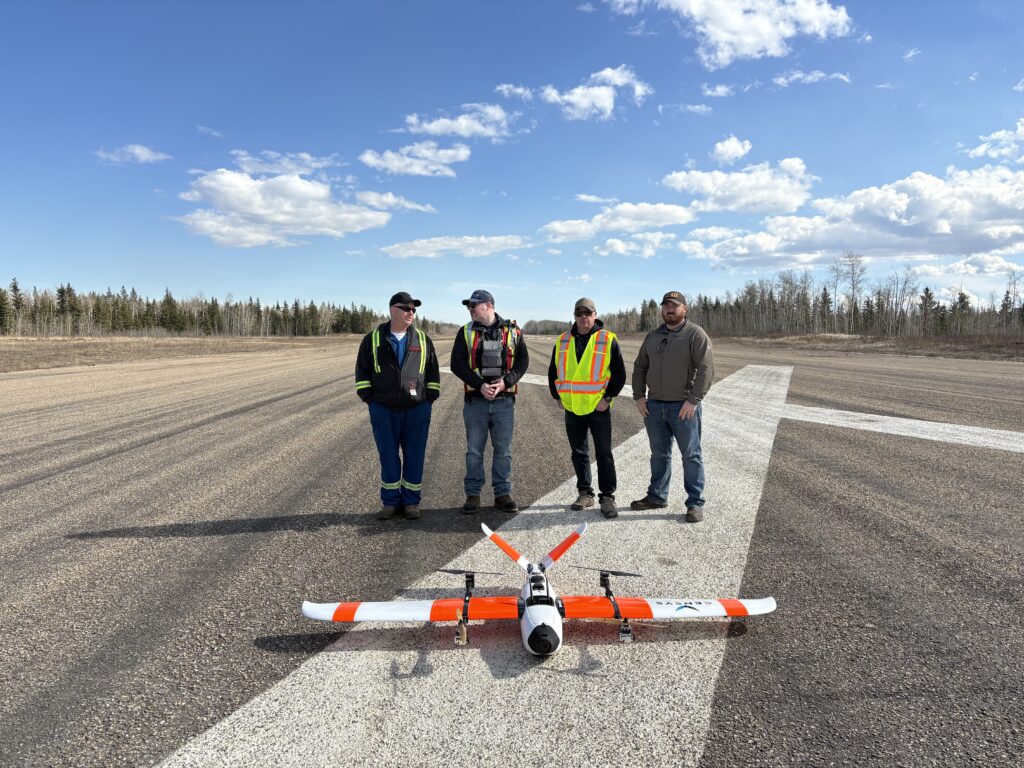
AIRmarket is now putting the technology to work across Alberta in wildfire response, precision agriculture, infrastructure monitoring, and emergency services.
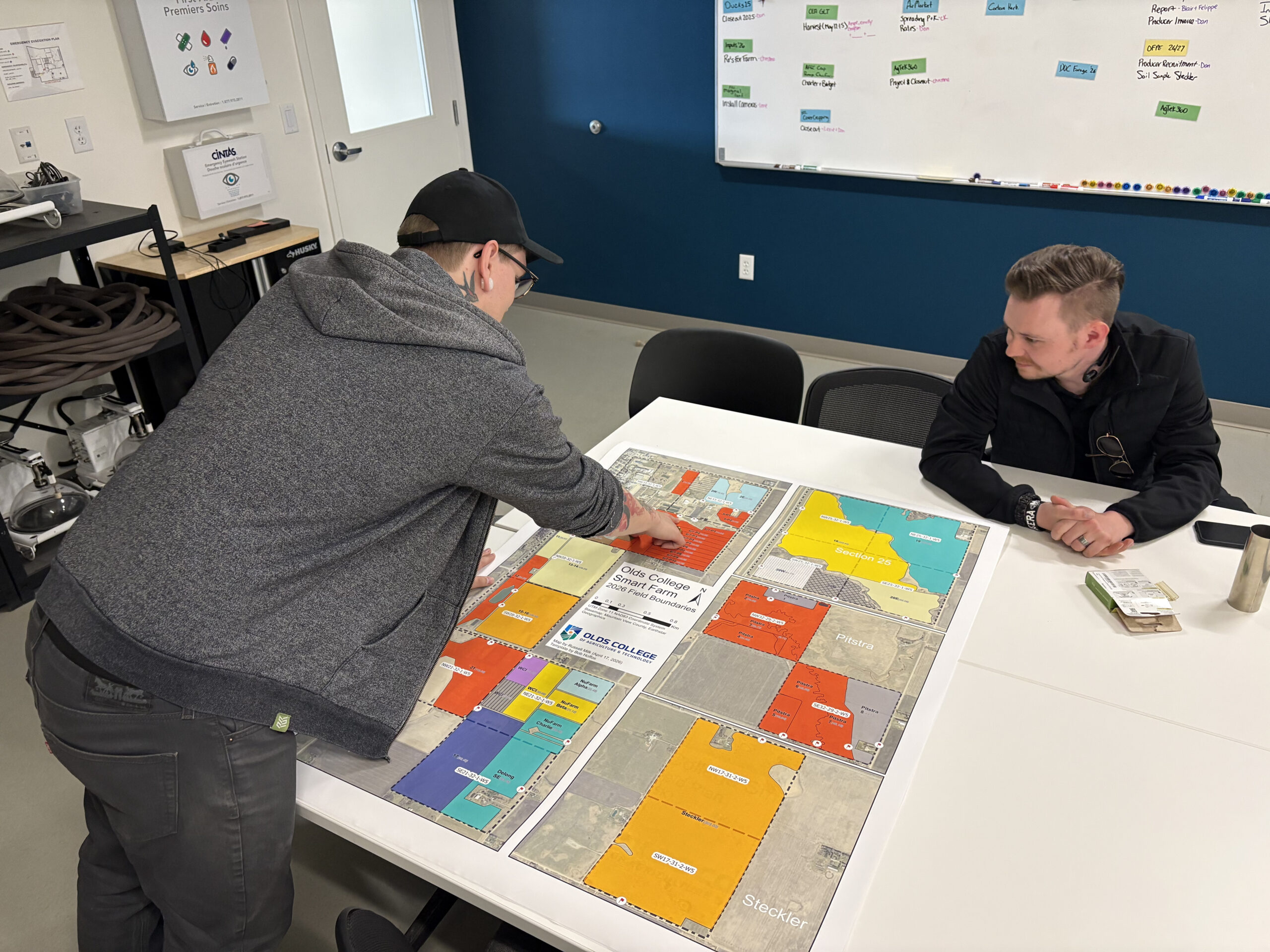
AI-enabled drones can detect smoke and fire earlier, provide responders with up-to-date information, and support the delivery of supplies to remote crews. In agriculture, they can identify where treatment is needed and enable more precise use of fertilizer and other inputs. During an emergency, live aerial video can help responders understand conditions and prepare before they arrive.
The opportunity is not only to reach places faster. Sending a lightweight electric aircraft instead of a truck, van, or helicopter could reduce fuel use and emissions associated with inspections, deliveries, and other routine work.
“Our ambition is that by 2051, Alberta’s low-altitude airspace will have displaced hundreds of thousands of vehicle journeys a year, making emissions reduction not a co-benefit of the drone economy but its defining achievement,” said Lindsay Mohr, CEO/Founder/CTO at AIRmarket. “And because the airspace management system enabling it is being built here, the expertise and the export opportunity stay in Alberta.”
From Field Trials to a Province-Wide Network
ERA invested $2.3 million in the project, helping establish Canada’s first drone-advantaged airspace in the Greater Edmonton region. The shared operating environment provides municipalities and industry with a place to adopt the technology without developing their own airspace-management systems.
PTAC supported AIRmarket with the funding application and continues to help manage the project, its partners, and its stakeholders.
Four proof-of-concept programs are now operating with Alberta Wildfire, Strathcona County Emergency Services, SAIT CIRUS, and Olds College. A local public safety working group also includes more than 30 organizations exploring how drones can support coordinated emergency response.
“ERA’s funding took us from concept to field-tested technology far faster than we could have managed otherwise,” said Mohr. “That ecosystem is now spreading across the region’s emergency-response and municipal landscape.”
AIRmarket envisions a province-wide network of more than 100 docked drones and shared systems that allow fire, police, and emergency medical services to collaborate. By demonstrating the technology in real-world operations, the company is helping scale an Alberta-made innovation that can improve safety, reach remote communities, and transform how essential services are delivered across the province.