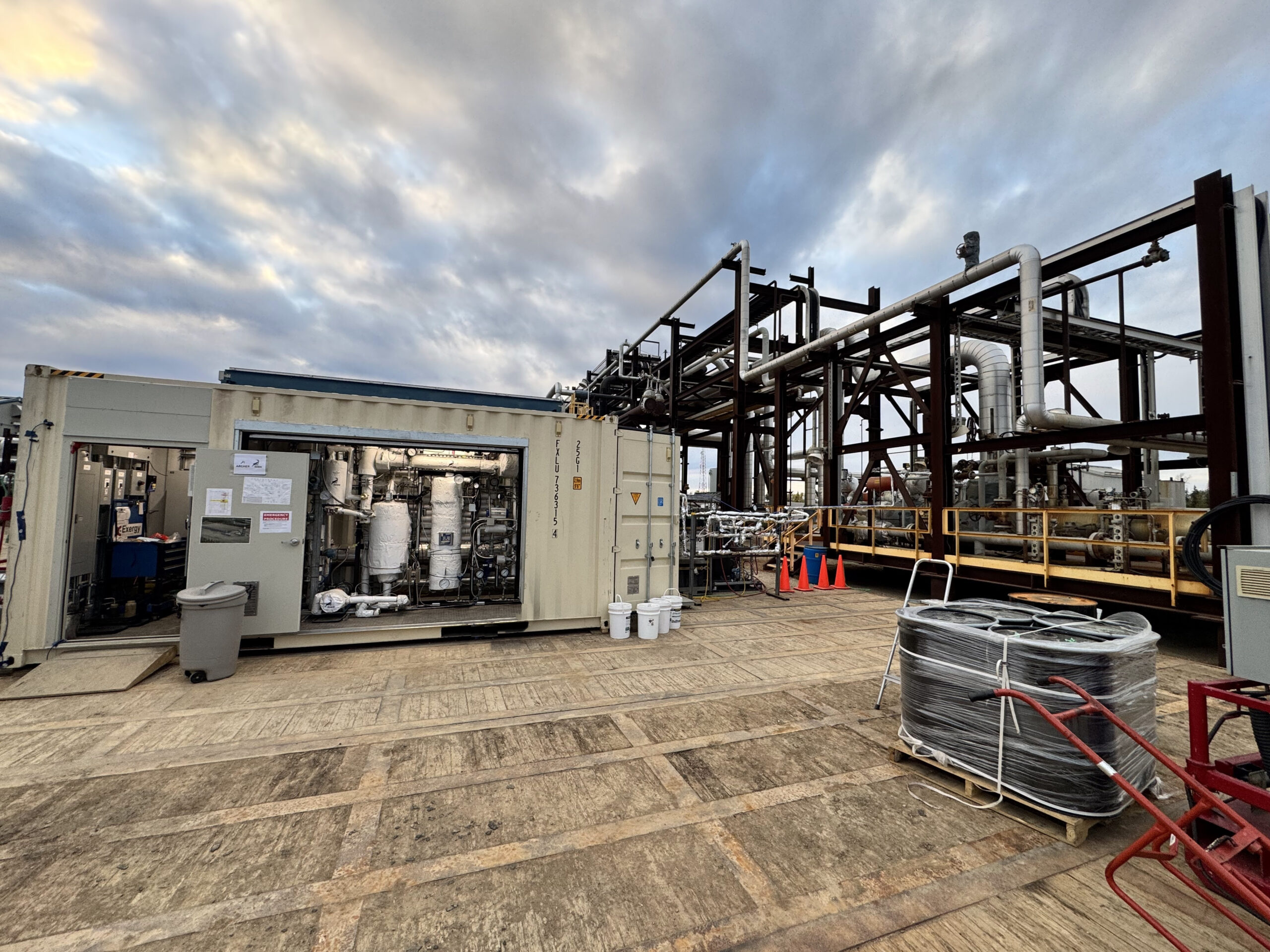
Archer BD founder and CEO Rodger Bernar first envisioned the need for ibex™ in 2011 while working at a single-well heavy oil battery near Lloydminster. The relatively simple operation led him to question the large, complex facilities used for steam-assisted gravity drainage, or SAGD.
“The dream was to make steam simpler to make from emulsion with the fewest steps possible,” Bernar said.
Bernar realized that early vision by inventing ibex™ after 9 years of searching. A successful field trial of a prototype at an operating oil sands site in 2025 provided the evidence needed to advance the technology toward a larger pre-commercial demonstration.
A Shorter Route for Water and Steam
Steam is central to producing Alberta’s bitumen, a thick form of oil that does not flow easily at underground temperatures. With SAGD, producers inject steam underground to heat the bitumen, allowing it to flow more easily to the surface.
The hot mixture of bitumen and water called “emulsion” then travels to a central processing facility, where operators separate the water, treat it, and convert it back into steam. The steam is then transported back to the wellpad, losing some heat along the way.
ibex™ shortens the process by generating steam directly from emulsion at the wellpad. The steam can then be injected back underground to produce more bitumen.
“We proved we can make steam this way and do it much simpler with equipment we can source off the shelf today, in combination with the proprietary bitumen/emulsion contactor,” Bernar said.
Proving ibex™ in the Field
Turning Bernar’s vision into a working system took years of testing. Archer explored different ways to generate steam safely using emulsion directly as the feed.
Early support from Alberta Innovates and the National Research Council of Canada’s Industrial Research Assistance Program helped the company build and operate an off-site prototype. The next step was to determine whether the technology could operate continuously under the changing conditions at an oil sands site.
A $1.4 million project supported by Emissions Reduction Alberta, the National Research Council of Canada, a major producer and Archer enabled the prototype to be modified and tested in the field.
“We learned how to deal with real-life field conditions and showed that the technology works,” Bernar said.
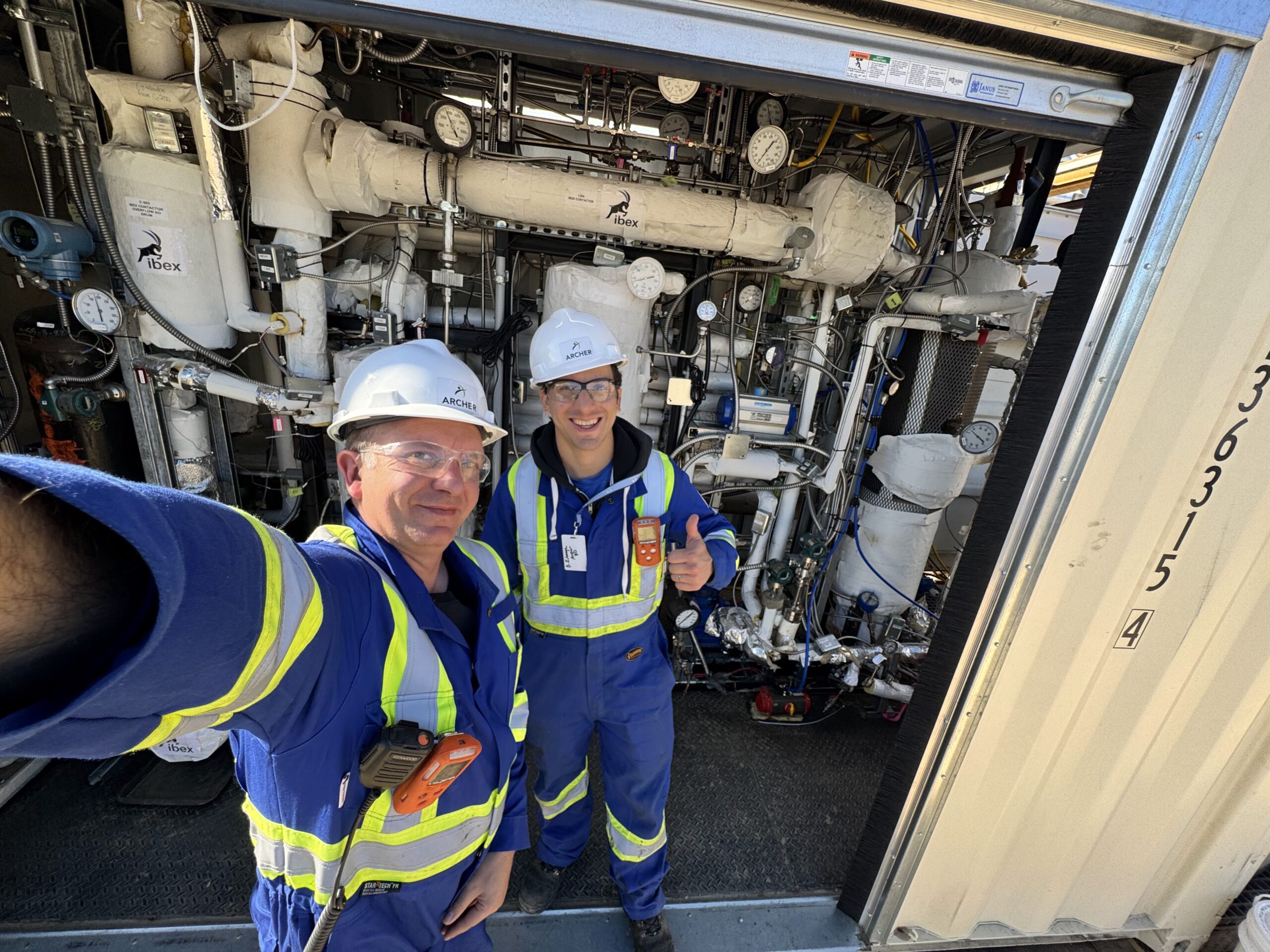
The results gave Archer’s oil sands client the confidence to conduct a follow-on screening study and provided the information needed to scale up a key system component.
Moving Toward Commercial Use
Field testing has shifted Archer BD’s focus from proving the technology to building the case for the first field demonstration and wide adoption.
“Once producers understand the potential to achieve lower capital and operating costs at a much smaller scale, it is no longer ‘if this works.’ It becomes: ‘when we make this work, imagine what we can do,’” Bernar said.
Archer BD estimates that ibex™ could significantly reduce the capital intensity of expanding or building new surface facilities, enabling them to be 1/6th the size of current best-in-class projects. Its modular design supports faster development and expansion, up to 6,000 bpd for smaller reservoirs in Alberta and Saskatchewan, compared with the large, economy-of-scale 30,000-40,000 bpd expansions required today.
ibex™ unlocks a completely new way to develop the resource at much lower capital risk and improved execution. Instead of building large, complex facilities, operators can achieve a more predictable SAGD manufacturing model.
This approach significantly improves company resilience as operators can grow affordably in uncertain markets with constrained market access. The technology offers 15-30% lower energy intensity when considering better efficiencies and the energy lost in long-distance steam lines, while it achieves more than 90 per cent water recycle.
Archer BD is now exploring the development of a longer-term field demonstration by 2029. Through the demonstration, Bernar intends to provide the operating evidence needed to support wide adoption across Alberta and beyond, bringing his original vision closer to reality.